
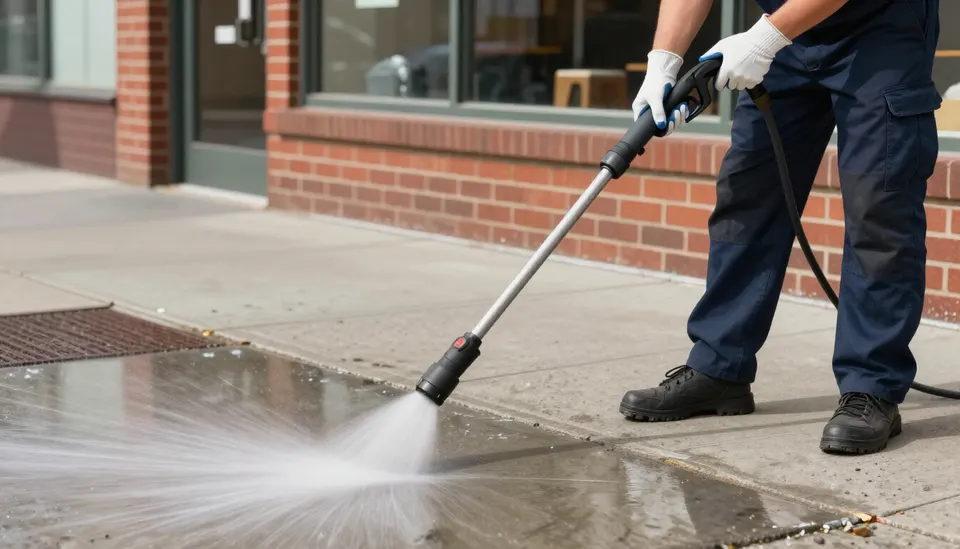
A business exterior collects more than ordinary dust. Foot traffic, deliveries, grease, spills, weather exposure, and graffiti can all affect the appearance of storefronts and paved areas. Waiting until every surface looks heavily soiled can make maintenance harder to organize and leave important issues unnoticed.
Regular exterior pressure washing can be part of a practical property-care routine, but regular does not mean the same method on every surface or a fixed schedule for every business. San Francisco and Bay Area properties need an approach based on use, condition, materials, and responsible wastewater management. This guide explains how to plan that routine.
Start with a condition-based inspection
Walk the property and distinguish cleaning needs from repair problems. Dirt, gum, grease, and surface buildup may be appropriate cleaning targets. Cracks, failed sealants, loose coatings, and water intrusion need assessment or repair rather than simply more washing. Photograph the conditions so the service scope is clear.
Different areas can accumulate contamination at different rates. A restaurant-adjacent sidewalk may need more frequent attention than a sheltered office wall. Loading areas may have spills unrelated to customer traffic. Inspecting by zone helps avoid unnecessary whole-property washing and focuses work where it is useful.
Keep storefront appearance consistent
Entrances and customer-facing paving
Cleaning can improve the presentation of entrances by removing accumulated deposits. A defined scope helps avoid isolated clean patches beside untreated buildup. Coordinate sidewalk and frontage care where appropriate, while recognizing that glass, frames, masonry, and paint require different methods.
Signs, trim, and sensitive components
Direct high-pressure spray can damage seals, coatings, and fixtures or force water into joints. Protect sensitive areas and choose gentler alternatives where needed. A professional should identify components that are unsuitable for standard pressure washing rather than treating the entire frontage as durable concrete.
Address grease and recurring spills
Grease around food-service areas and oil near loading routes may require compatible pretreatment and controlled heated cleaning. Removing surface deposits is different from eliminating stains absorbed into concrete. Ask for realistic expectations and avoid assuming every dark area will return to its original color.
Maintenance should also address the source of recurring contamination. Leaking equipment, poor waste-storage practices, or repeated spills can undermine cleaning. Work with the relevant property team to correct those issues. Pressure washing is not a substitute for source control or safe spill-response procedures.
Protect building materials over time
Repeated aggressive washing can wear coatings, erode mortar, or etch concrete. The goal of routine care is to preserve the property, not to maximize pressure. The contractor should select products and settings for the surface and evaluate any existing damage before work begins.
Keep records of successful methods, known finishes, and manufacturer instructions. If a wall has an anti-graffiti coating, future cleaning needs to remain compatible with that system. A new contractor should not have to guess which protective products are present or how a previous treatment affected the surface.
Plan safe working windows
Commercial property cleaning needs to fit around tenants, customers, deliveries, and other trades. Identify the area to be closed, the safe alternate route, and the person who can approve changes. Hoses, equipment, spray, and wet surfaces require appropriate separation from occupants.
San Francisco curb access and busy Oakland storefronts can affect setup. Parking garages may add vehicle clearance and ventilation constraints. Share actual conditions, not just the address, when requesting an estimate. Confirm whether any barriers, permits, or building approvals are needed before scheduling the work.
Include wastewater recovery in routine service
Cleaning water can contain oil, detergents, dirt, and paint residue. Identify drains and runoff paths before the crew starts. Dry sweeping and debris removal can reduce the contamination load, but they do not make the remaining wash water suitable for uncontrolled discharge.
Contain and collect wastewater and verify an appropriate disposal route with the relevant authority where needed. A biodegradable product does not automatically permit discharge into a storm drain. Regular service should include the same responsible controls as a one-time cleanup, with requirements confirmed for the actual site.
Make the maintenance scope easy to review
A useful plan lists the surfaces, target deposits, proposed methods, and expected results. Clarify which areas receive routine washing and which need spot treatment or separate graffiti removal. Ask how additional work will be approved if inspection reveals an unexpected coating issue or severe staining.
- Inspect by zone and record changing conditions.
- Separate cleaning tasks from repairs and source-control work.
- Confirm occupant notices and safe access routes.
- Specify runoff collection and cleanup responsibilities.
- Keep completion photos and product information.
- Reassess frequency when business use changes.
This structure helps property managers compare service proposals and budget without purchasing unnecessary treatments. It also creates a clearer record of what was completed and what still requires attention from another trade.
Coordinate graffiti and exterior cleaning
Graffiti removal can be planned alongside sidewalk or building care, but spray paint requires its own material-specific assessment. Specialized removers and test patches may be needed before controlled rinsing. Do not assume that routine hot water pressure washing removes every tag safely.
For repeated incidents, discuss an appropriate anti-graffiti coating and its maintenance obligations. The coating may simplify compatible cleaning, but it does not stop vandalism or eliminate inspections. Combining records and planned responses can reduce confusion when several service needs arise at the same property.
Explore our pressure washing services and read about pressure washing cost in San Francisco. If paint is the problem, our surface-specific graffiti removal guide explains why cleaning needs a different approach.
Frequently asked questions
How often should a business schedule exterior washing?
There is no universal interval. Use, contamination, exposure, material condition, and local requirements should guide a condition-based plan rather than an arbitrary calendar.
Does regular washing prevent building repairs?
It does not prevent every repair or correct existing defects. Cleaning can make some conditions easier to inspect, but cracks, failed coatings, and drainage issues need appropriate assessment.
Can pressure washing be combined with graffiti removal?
Often the work can be coordinated, but the methods and scope should remain surface-specific. Paint chemistry and existing finishes can require specialized testing and pretreatment.
Plan practical exterior care
Contact Bay Area Graffiti Removal Service for a free estimate on regular commercial exterior cleaning, pressure washing, and graffiti removal. Send photos and describe your property’s use and access requirements. We can discuss a maintenance approach for San Francisco and the wider Bay Area.
Find the right service for your property
Tell us about your surface, location, and access requirements before choosing a cleaning method.
Explore related services Contact our team