
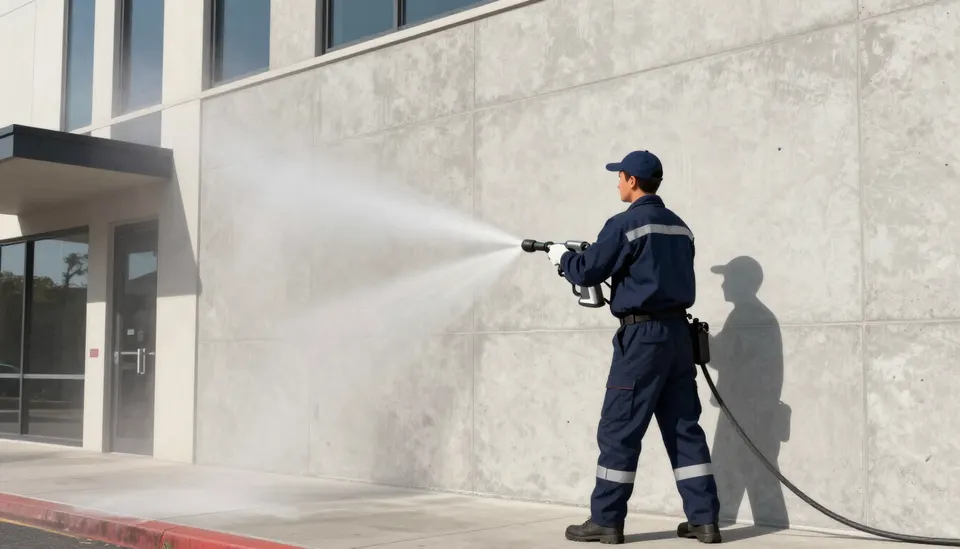
Graffiti on brick, concrete, and painted walls may look similar from the sidewalk, but the surfaces behave differently during cleaning. Paint can enter pores in masonry, cling to a concrete sealer, or bond with an existing wall coating. Choosing a remover or pressure setting without understanding the material can leave a more visible problem than the original tag.
This guide explains the decisions behind graffiti removal from walls, rather than offering a universal do-it-yourself recipe. Chemical compatibility, controlled rinsing, and wastewater collection all matter. If the surface is old, coated, damaged, or architecturally significant, ask a professional to assess it before attempting removal.
Start with inspection and a small test
Identify the wall material, the original finish, and any previous repair or cleaning. Take clear photographs before work begins. Look for loose mortar, peeling paint, cracks, or areas where water could enter the building. Fresh graffiti is worth addressing promptly, but haste should not replace a compatibility check.
A test patch in an inconspicuous area helps evaluate both removal effectiveness and surface change. Observe whether the original coating softens, the masonry changes color, or the texture becomes uneven. Follow the product manufacturer’s instructions; mixing chemicals or extending dwell time without guidance can create unnecessary risks.
Brick graffiti removal
Porosity and mortar joints
Brick can absorb paint differently across its face and mortar joints. Some walls contain several brick types or replacement areas. A surface-specific remover may loosen the graffiti before gentle agitation and controlled rinsing. Multiple careful treatments can be more appropriate than increasing pressure to chase a remaining shadow.
Older and historic brick
Weathered brick and soft mortar are especially vulnerable to abrasive treatment. High pressure can erode joints or alter the fired surface of the brick. Historic facades may require specialist assessment and permission before work. Do not assume that a method used on a newer commercial wall is acceptable for an older San Francisco building.
Concrete graffiti removal
Concrete texture, age, and sealers influence the treatment. Smooth finished concrete differs from rough retaining walls and decorative surfaces. Paint may remain in small pores even after the main marking is removed. An assessment should distinguish residual pigment from damage caused by an earlier cleaning attempt.
Controlled pressure washing can support concrete graffiti removal after suitable pretreatment, but the operator should consider nozzle distance, pressure, temperature, and runoff. New or weak concrete may be vulnerable to etching. Existing sealers can be lifted by incompatible products, leaving a patch that looks different when the surface dries.
Painted walls need finish protection
On painted walls, the main challenge is separating the unwanted paint from the underlying coating. Some removers can dissolve both. A successful test may allow selective cleaning, while an unsuccessful one may show that localized repair and repainting are more practical. The decision should be based on condition and compatibility, not a blanket preference.
If repainting is needed, confirm the existing color and coating type. Cleaning and preparation still matter because contaminants or softened paint can affect adhesion. Painting a whole panel or defined architectural section may produce a more consistent appearance than a small mismatched patch. Ask about color variation before authorizing work.
Why more pressure is not always the answer
Hot water and controlled pressure can help rinse loosened material, but neither makes surface assessment unnecessary. Excessive pressure can cut into coatings, erode masonry, or force water behind siding and through joints. Abrasive methods may be unsuitable for delicate finishes and should not be selected casually.
The goal is to remove the marking while preserving the original surface as far as practical. A faint residual shadow may sometimes be less damaging than repeated aggressive treatment. A professional should explain the tradeoff and obtain approval before switching to a method that could permanently change the wall.
Protect surrounding areas and collect runoff
Prepare the work area before applying products. Adjacent glass, metal fixtures, landscaping, and painted trim may need protection. Pedestrians and residents need a safe route away from spray and wet surfaces. Where unknown old coatings may be disturbed, discuss whether specialist evaluation is needed before proceeding.
Cleaning wastewater can carry paint particles and chemicals. Contain and collect it rather than allowing it to enter storm drains. Appropriate handling depends on the site and the relevant local authority. San Francisco, Oakland, and Berkeley property owners should ask how the contractor will manage runoff and confirm any required permissions.
Avoid these common shortcuts
- Using the strongest available remover without checking compatibility.
- Holding a narrow high-pressure jet close to brick or paint.
- Mixing cleaning products or ignoring safety instructions.
- Treating a coated wall as if it were bare concrete.
- Allowing cleaning water to run into street drains.
- Assuming a visible shadow always means more pressure is needed.
Document the successful method and keep the product details with your property records. If graffiti returns, that history can help the next contractor choose a compatible treatment rather than starting from guesswork.
For related guidance, read our graffiti removal cost guide and explore our professional graffiti removal services. For cleaning beyond graffiti, see our pressure washing services.
Frequently asked questions
Can household solvents remove spray paint?
Some can affect paint, but they may also damage the wall finish or create exposure and disposal problems. Compatibility testing and appropriate safety controls are essential; avoid improvised mixtures.
Will pressure washing remove all graffiti from brick?
Not always. Brick porosity and paint chemistry can require specialized pretreatment, and some shadowing may remain. Excessive pressure can permanently damage the masonry.
Can an anti-graffiti coating be applied afterward?
A compatible coating may be an option once the surface is suitably clean, dry, and prepared. Product choice depends on the wall material and the intended maintenance process.
Ask for a material-specific plan
Contact Bay Area Graffiti Removal Service for a free estimate on brick, concrete, or painted-wall graffiti. Send photos and tell us about existing coatings and previous cleaning attempts. We can discuss an appropriate approach for residential and commercial properties throughout San Francisco and the Bay Area.
Find the right service for your property
Tell us about your surface, location, and access requirements before choosing a cleaning method.
Explore related services Contact our team