
When graffiti appears on a building, choosing a contractor can feel urgent. Search results for the best graffiti removal company in San Francisco offer plenty of confident language, but the most useful question is simpler: who can explain a safe, suitable approach for your property? The right choice depends on the surface, access, and scope, not just a prominent advertisement.
Professional graffiti removal services should begin with assessment rather than a promise that one method works everywhere. Ask about experience with your building material, the proposed treatment, and how unexpected problems will be handled. This checklist helps homeowners, business owners, and property managers evaluate a graffiti cleaning company in the Bay Area without relying on unsupported claims.
Look for relevant surface experience
A contractor who frequently cleans concrete may not use the same approach on historic brick, coated metal, or painted stucco. Ask for examples involving similar materials and comparable access conditions. When reviewing project images, confirm that before-and-after photographs show the same area and that the contractor has permission to share them.
Discuss older repairs, sealers, and previous graffiti treatments. These details influence product compatibility and the likelihood of residual shadowing. A thoughtful contractor will acknowledge limitations rather than promising a perfect result before seeing the wall. For delicate or significant architectural surfaces, additional conservation advice may be appropriate.
Confirm insurance and responsibilities
Ask for current evidence of insurance and clarify the scope of coverage relevant to the job. Property managers may need a certificate and additional documentation before a contractor can work onsite. Requirements differ between properties, so communicate them early instead of waiting until the crew arrives.
The proposal should identify the company performing the work, the site contact, and any subcontracting arrangements. It should also explain responsibilities for access, water supply, protection of adjacent property, and necessary permits or approvals. Do not assume that every possible obligation is included simply because the estimate says graffiti removal.
Ask about equipment and testing
Controlled methods matter more than maximum pressure
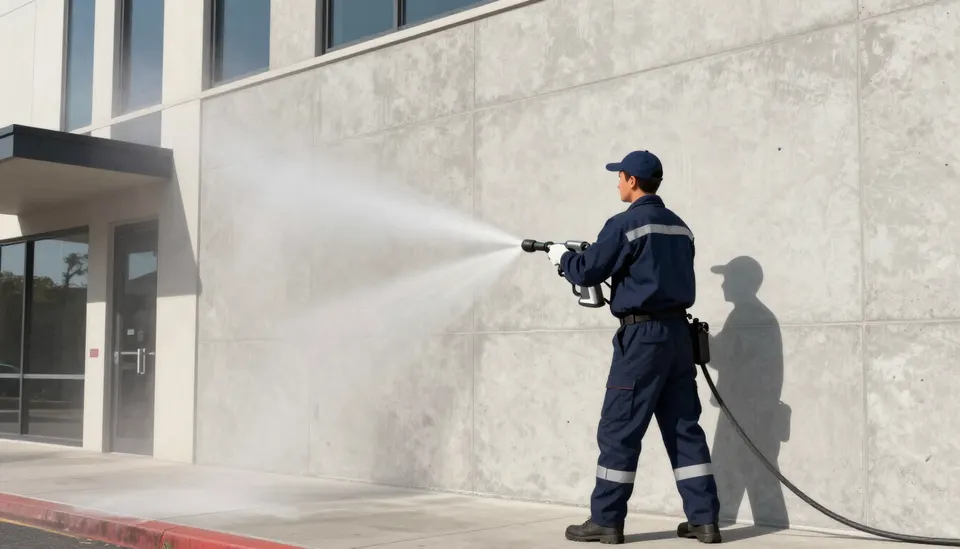
Suitable equipment allows the operator to adjust pressure, temperature, and technique. High-pressure power washing can damage masonry, force moisture behind finishes, or remove the original paint. A professional should be able to explain why a particular method is appropriate and how a small test area will be evaluated.
Products should match the material
Ask how removers are selected and whether manufacturer instructions and safety data sheets guide the work. A remover that lifts paint from concrete may be unsuitable for a coated sign or plastic panel. Product choice should consider both the graffiti and the original surface, along with nearby plants, pedestrians, and other sensitive areas.
Review the wastewater plan
Graffiti cleaning can produce wastewater containing paint particles, solvents, and other contaminants. Ask how runoff will be contained and collected. A clear plan should account for slopes, nearby drains, pedestrian areas, and the appropriate disposal route. Responsible handling should be discussed before work starts, not improvised after runoff reaches the street.
San Francisco, Oakland, Berkeley, and other Bay Area jurisdictions may have site-specific requirements. The contractor should confirm applicable rules with the relevant authority when needed. A vague claim that a product is green does not replace containment or permission for discharge. Biodegradable ingredients can still affect receiving waters.
Read the scope and communication plan
A strong estimate describes the area to be treated, the method, exclusions, and expected results. Ask whether multiple treatments are included and how the company will proceed if the test patch reveals finish damage. Clarify whether anti-graffiti coating, repainting, or additional pressure washing requires a separate proposal.
For commercial graffiti removal, communication is part of the service. Confirm the planned work window, barriers around the area, and who will update tenants or staff. Busy storefronts and apartment entries need a safe route for occupants throughout the job. Availability for an urgent request should be confirmed rather than inferred from general emergency-service advertising.
Questions worth asking before authorization
- Have you treated this surface and finish before?
- Will you test a small, inconspicuous area first?
- How will you protect windows, plants, and adjacent coatings?
- What is included in cleanup and wastewater collection?
- Who approves changes if the initial method is unsuitable?
- Can you provide a written scope and current insurance documentation?
Use the answers to compare contractors, not simply their totals. Clear explanations help you understand what you are buying. If a company avoids questions about surface protection or runoff, consider asking another provider for an assessment before committing.
Consider long-term property care
Repeated graffiti may justify a maintenance plan, more frequent inspections, or a compatible anti-graffiti coating. The right contractor can discuss these options without presenting a coating as a guarantee against vandalism. Keep cleaning records and product information so future treatments can remain compatible with the surface.
For buildings with sidewalks, parking areas, and storefronts, combining an assessment of graffiti with exterior cleaning can simplify planning. It does not mean every service should use the same pressure or chemical. Each part of the property still needs a material-specific approach and its own scope.
For related guidance, read our graffiti removal cost guide and explore our professional graffiti removal services. For cleaning beyond graffiti, see our pressure washing services.
Frequently asked questions
Should I choose the first company that promises same-day removal?
Confirm actual availability, the method, and the scope. Speed matters, but surface protection and safe access should not be skipped to meet a rushed deadline.
How can I verify a project gallery?
Look for consistent before-and-after framing and ask whether the images show the contractor’s work. Images alone do not establish insurance, qualifications, or suitability for your building.
Can one contractor clean every surface?
Some handle many materials, while others refer specialist surfaces elsewhere. A willingness to identify limits is a useful sign of professional judgment.
Talk through your project
Contact Bay Area Graffiti Removal Service for a free estimate and a discussion of your property’s needs. Send photos, identify the surface, and describe your location and access requirements. We can explain suitable graffiti removal and pressure washing options for San Francisco and nearby Bay Area communities.
Find the right service for your property
Tell us about your surface, location, and access requirements before choosing a cleaning method.
Explore related services Contact our team