
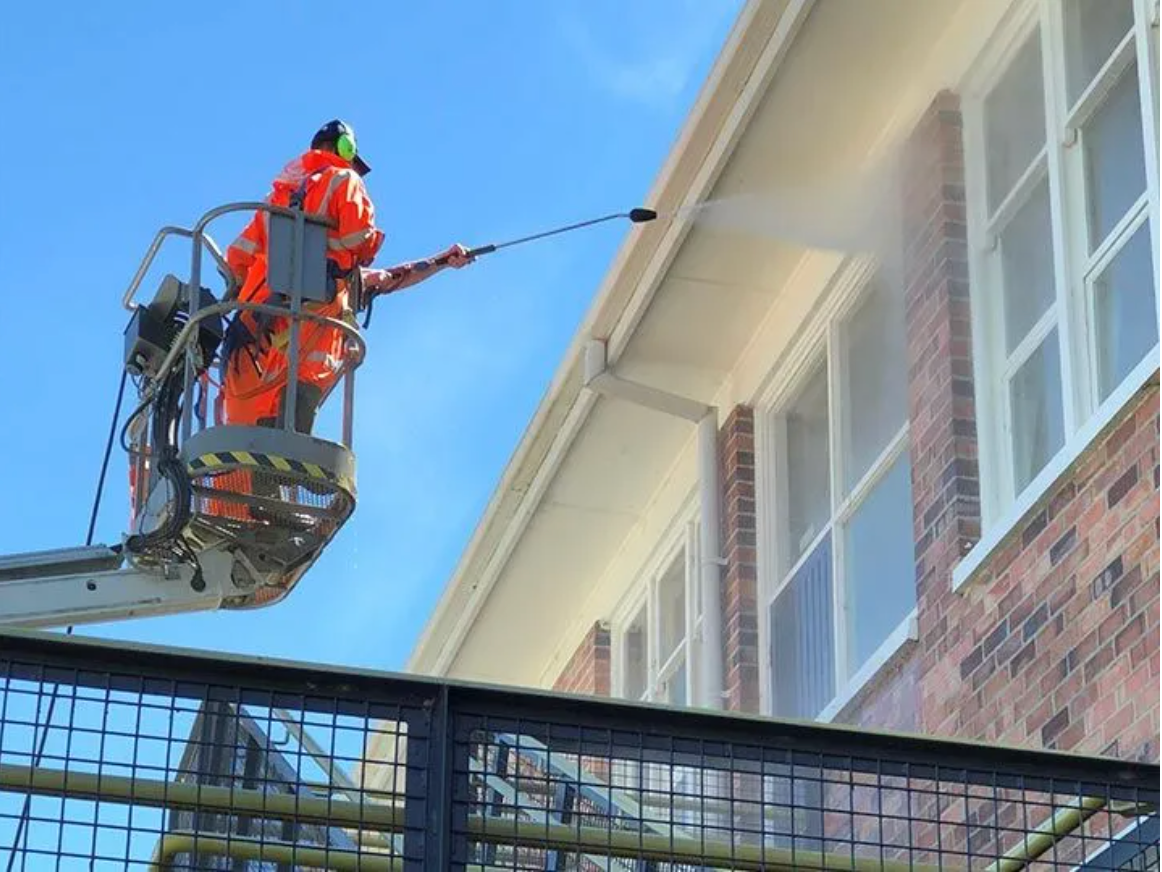
Commercial graffiti removal is not defined by one chemical or machine. A building may have painted panels, brick columns, concrete walls, metal doors, and glass signs within a few feet of each other. The best method is the one that addresses the marking while respecting the material and existing finish.
For property managers in San Francisco and the Bay Area, a clear treatment plan matters more than a promise of maximum cleaning power. This guide explains common approaches, the role of testing, and the reasons a contractor may combine methods or recommend a different scope after inspection.
Inspect the building and the marking
Start by identifying the surface, coating, and condition. Note loose mortar, cracks, peeling paint, previous repairs, and areas where water could enter. Graffiti paint, ink, and marker can behave differently, and multiple layers may require more work than a single fresh tag. Photographs help document both the incident and existing defects.
A small test area provides evidence about product compatibility and expected results. The test should be evaluated for removal effectiveness and any change to color, texture, or sheen. A contractor should not apply a strong remover across an entire facade before checking how the original finish responds.
Specialized graffiti removers
Match chemistry to the surface
Specialized products may loosen spray paint or marker so it can be removed with suitable agitation and rinsing. The choice should reflect manufacturer instructions, the graffiti type, and the substrate. A product appropriate for bare concrete can be unsuitable for coated metal, plastic, or a painted wall.
Control application and dwell time
Allowing a compatible product the specified dwell time can reduce the need for aggressive mechanical force. Too little time may be ineffective; leaving it too long can create other problems. Follow manufacturer guidance and appropriate safety controls rather than improvising stronger mixtures or assuming more product produces a better result.
Controlled pressure washing
Pressure washing may rinse loosened paint and residue from durable surfaces after pretreatment. The operator should choose settings, distance, temperature, and technique for the material. Hot water can support some treatments, but it does not make every graffiti paint water-soluble or every building finish heat-tolerant.
Excessive pressure can etch concrete, remove paint, damage mortar, and force water through joints. A narrow jet can leave visible cleaning lines. The aim is to preserve the substrate as far as practical, not simply to make the marking disappear at any cost. Some residual shadowing may require a discussion of limits rather than another aggressive pass.
Painted walls and coated components
On painted walls, the remover may affect the original coating as well as the graffiti. Selective cleaning should be tested before committing to a large area. If compatibility is poor or the finish is already failing, controlled preparation and repainting of a defined section may be a better maintenance choice.
Metal doors, factory-coated panels, and signs also need finish protection. Provide coating product details when available. Protect adjacent glass, seals, and hardware, and avoid using a masonry treatment on every component simply because the markings came from the same incident. Different materials can require separate procedures within one scope.
Abrasive and specialist techniques
Some projects may call for specialist methods, but abrasive cleaning is not an automatic upgrade. It can alter texture or permanently remove material. Historic brick, natural stone, decorative surfaces, and fragile coatings deserve particular caution. Seek specialist assessment and any necessary approvals before an irreversible method is selected.
Ask the contractor to explain why a proposed technique is appropriate and what test results support it. If the building has unknown older coatings, consider whether evaluation for hazardous materials is needed before disturbance. Cosmetic urgency should not bypass material identification or the property’s approval process.
Site preparation and wastewater controls
Protect nearby finishes, landscaping, and occupants. Plan barriers, hose routes, and safe pedestrian access before work begins. Storefronts, apartment entrances, and parking structures introduce different constraints, so share operating hours and access instructions when requesting an estimate.
Contain and collect cleaning wastewater, which can carry paint particles, chemicals, and dirt. Identify drains and runoff paths in advance. Do not assume any drain is an acceptable disposal route. Confirm applicable local requirements and permissions with the relevant authority, and keep contaminated water out of storm drains.
Define success before work starts
A useful scope identifies each surface, the proposed method, and expected results. Ask whether repeated treatments are included and who approves a change when a test reveals a risk. Distinguish removable deposits from discoloration inside porous material or damage caused by earlier attempts.
- Document the graffiti and existing condition with photos.
- Request material-specific testing and protection.
- Confirm access and occupant-management arrangements.
- Ask how cleanup and wastewater recovery are included.
- Record the successful products and treatment afterward.
Completion should be evaluated after the surface dries where practical. Wet masonry can temporarily look darker or hide variations. Keeping records supports later maintenance and helps avoid incompatible products when new incidents occur.
For related guidance, read our graffiti removal cost guide and explore our professional graffiti removal services. For cleaning beyond graffiti, see our pressure washing services.
Frequently asked questions
Is pressure washing the best method for every building?
No. Material condition, coatings, paint chemistry, and access determine the approach. Pressure washing may support removal, but some surfaces need gentler or specialist methods.
Can a professional remove all shadowing from concrete?
Not always. Pigment can enter pores, and aggressive attempts to remove every trace may damage the surface. Discuss realistic limits before authorizing further treatment.
Should a protective coating be added after cleaning?
A compatible coating may help with later removal on repeatedly targeted surfaces. It requires suitable preparation and its own maintenance plan, and it does not prevent vandalism.
Request a building-specific cleaning plan
Contact Bay Area Graffiti Removal Service for a free estimate on commercial building graffiti removal. Send photos and details about finishes, access, and previous treatments. We can discuss suitable methods for San Francisco, Oakland, and other Bay Area properties.
Find the right service for your property
Tell us about your surface, location, and access requirements before choosing a cleaning method.
Explore related services Contact our team