
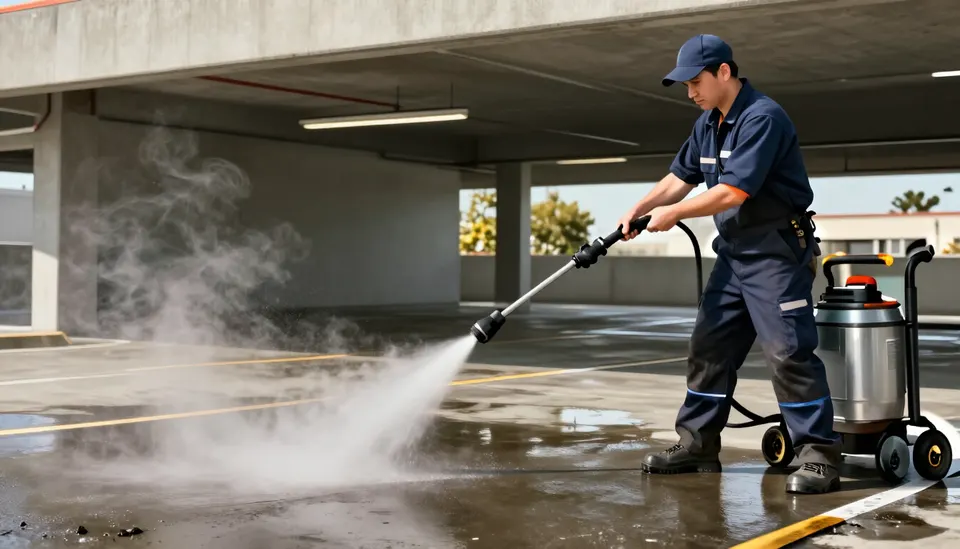
Grease near a restaurant entrance, oily deposits in a parking area, and spray paint on a concrete wall can all resist an ordinary rinse. Hot water pressure washing adds heat to the cleaning process, which can help loosen certain deposits and improve the performance of compatible products. It is a useful tool, but not a universal answer.
For Bay Area commercial property cleaning, the operator still needs to identify the material and the contamination before choosing temperature, pressure, and chemistry. This guide explains how heated washing is used and why some dirt, grease, and graffiti require additional treatment rather than simply hotter water.
What heat contributes to cleaning
Heat can help soften greasy deposits and support the action of a suitable detergent. Combined with controlled mechanical rinsing, it may make some cleaning tasks more effective than cold water alone. The result depends on the type of deposit, the condition of the surface, and the method used to collect the loosened material.
Water temperature should match equipment ratings, product instructions, and surface tolerance. More heat is not automatically better. Some coatings, sealants, plastics, and adjacent materials can be damaged by unsuitable temperatures. A professional evaluates these limitations before applying heated water to a building or paved area.
Dirt, grease, and oil need different judgments
General dirt and surface buildup
Loose dirt may be addressed through sweeping and controlled washing without heated treatment. Baked-on grime or mixed deposits can need pretreatment and agitation. Removing dry debris first reduces the material entering the wastewater and prevents a pressure washer from simply redistributing it across the site.
Grease and oil on concrete
Greasy areas may benefit from a compatible degreaser and hot water, but concrete can absorb contaminants into its pores. Older oil stains may not disappear completely even after the surface residue is removed. The contractor should distinguish cleaning the active deposit from promising total removal of discoloration within the material.
Why graffiti usually needs more than heat
Spray paint and marker formulations vary. Heat can support rinsing after a suitable remover has loosened the marking, but it does not reliably dissolve every coating. Graffiti on brick, concrete, or painted walls should be tested with a material-specific approach that considers the original finish.
A remover that works on bare masonry may affect a painted wall or coated sign. Porous materials can retain pigment below the surface. Repeated aggressive washing can etch concrete, damage mortar, or spread loosened paint. Professional graffiti removal services should explain the role of pretreatment and the limits of the proposed result.
Pressure is only one part of the method
The operator can adjust pressure, flow, temperature, nozzle selection, distance, and technique. The aim is to rinse loosened contamination without damaging the substrate. A narrow jet held too close can create visible lines or remove the original coating, even when the water itself contains no cleaning product.
Building exterior pressure washing also requires attention to joints, vents, windows, and electrical fixtures. Water can enter places that are not designed for direct spray. An assessment should identify sensitive areas and whether a lower-pressure alternative is more suitable than standard pressure washing.
Typical commercial applications
Sidewalks, loading areas, parking garages, and certain durable exterior surfaces may be candidates for heated cleaning after assessment. Restaurant-adjacent areas can contain food grease, while garage floors may carry oils and tire residue. These are not interchangeable problems, so the same product and setting should not be applied everywhere.
In San Francisco and Oakland, pedestrian traffic and nearby street drains affect the work plan. San Jose parking structures may add ventilation, clearance, and vehicle-management requirements. Describe the contamination and access conditions when requesting an estimate so the contractor can determine what equipment and containment are appropriate.
Wastewater control is part of heated washing
Hot water does not make contaminated runoff harmless. Wash water can carry emulsified oils, detergents, paint residue, and other contaminants. Plan containment and collection before work starts, with attention to slopes and nearby drains. The collected water needs an appropriate disposal route based on its contents and local requirements.
Do not assume an indoor drain is suitable or that a biodegradable product authorizes discharge. Confirm permissions with the relevant local authority where needed. A professional should explain storm-drain protection and recovery arrangements, rather than presenting wastewater management as an optional add-on after cleaning begins.
Preparing your property for an estimate
Send photographs of both the deposit and the surrounding area. Identify known coatings, previous cleaning attempts, and any restrictions on water or equipment access. Tell the contractor whether the area must remain in use and whether a safe alternate route is available for customers, residents, or staff.
- Describe whether the issue is grease, oil, dirt, paint, or a mixture.
- Provide approximate dimensions and the surface material.
- Mention nearby drains, doors, landscaping, and electrical fixtures.
- Ask about test areas and expected residual staining.
- Confirm cleanup and collection are included in the scope.
A clear description helps avoid purchasing an unnecessarily aggressive service. Sometimes a simpler method is sufficient; other times a combination of products, heat, and careful rinsing is warranted. The assessment should determine the approach.
Explore our pressure washing services and read about pressure washing cost in San Francisco. If paint is the problem, our surface-specific graffiti removal guide explains why cleaning needs a different approach.
Frequently asked questions
Does hot water remove all graffiti?
No. Paint chemistry and surface porosity often require specialized removers and testing. Heated rinsing can support treatment but does not replace a compatible removal process.
Is hot water always safer than more pressure?
Neither should be selected without assessment. Heat and pressure can both affect coatings and materials. The safest approach uses settings suited to the surface and contamination.
Can hot water eliminate old oil stains in concrete?
It may remove surface deposits, but absorbed oil can leave discoloration. Ask for realistic expectations after the surface has dried rather than assuming every stain will disappear.
Discuss the right cleaning method
Contact Bay Area Graffiti Removal Service for a free estimate on hot water pressure washing, graffiti removal, or commercial exterior cleaning. Share photos and your property location so we can discuss suitable treatment, access, and wastewater planning across San Francisco and the Bay Area.
Find the right service for your property
Tell us about your surface, location, and access requirements before choosing a cleaning method.
Explore related services Contact our team