
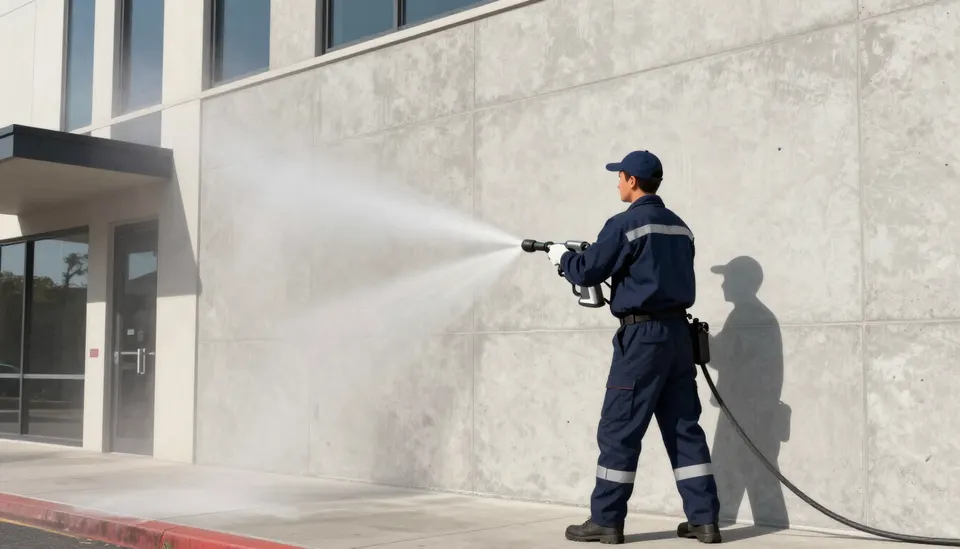
Graffiti in a shared courtyard, on a garage door, or beside an apartment entrance affects more than one household. The response may involve a property manager, an HOA board, residents, and a contractor. Without clear responsibilities, even a small cleanup can become delayed or lead to treatment that does not match the building’s finishes.
Graffiti removal for apartment buildings and HOAs in the Bay Area works best when approval, access, and surface information are organized before work starts. This guide explains how to plan cleanup for walls, fences, garages, and common areas while keeping residents informed and avoiding unnecessary damage.
Confirm ownership and approval
Determine whether the affected surface belongs to the association, a building owner, an individual unit, or a neighboring property. Common-area maintenance rules and approved-vendor requirements can differ. Do not assume a resident can authorize chemical cleaning or repainting on a shared facade simply because the marking is near their home.
Identify the person responsible for approving the estimate and any changes during treatment. Share insurance documentation requirements and access procedures early. A clear approval path helps the contractor avoid waiting at a locked gate or making an unapproved choice when a test reveals that the original coating is incompatible with a remover.
Document incidents consistently
Record the date, exact location, dimensions, and material. Photograph the graffiti from a distance and close up, including existing damage. For a large complex, a site map or building identifier helps distinguish similar walls and parking areas. Keep sensitive resident information out of photos submitted for estimates.
Follow the property’s reporting procedure and relevant local guidance where needed. If the graffiti includes an immediate threat or another safety concern, use the appropriate emergency or reporting channels before focusing on cosmetic cleanup. Documentation may also be useful for insurance or maintenance records.
Choose methods for each shared surface
Walls and masonry
Brick, concrete, and painted stucco behave differently during graffiti removal. Porous masonry may need compatible pretreatment and controlled rinsing, while a painted wall can lose its original finish if an unsuitable remover is used. A test patch helps determine whether cleaning or a controlled repaint is appropriate.
Fences, doors, and garages
Wooden fences, coated metal doors, and concrete garage walls should not receive a single standard pressure setting. Wood can roughen, paint can lift, and weak concrete can etch. Provide known coating details and previous treatment records so the contractor can assess compatibility instead of working from appearance alone.
Keep residents informed
Tell residents when and where work will take place, which routes are affected, and whether vehicles need to be moved. Hoses, equipment, spray, and wet areas require appropriate separation. Arrange a safe alternative route where needed, especially for shared entrances and accessible paths.
For apartment properties in San Francisco and Daly City, limited access and closely spaced entrances can shape the work plan. Oakland and San Jose parking areas may have different clearance or vehicle-management needs. Share actual site conditions and coordinate with deliveries or other contractors to avoid conflicting activities.
Include wastewater controls in the plan
Graffiti cleaning can release paint particles, cleaning chemicals, and dirt into wash water. Identify nearby drains and runoff paths before treatment. Courtyards and garages can make drainage less obvious than an open sidewalk, so do not assume a drain connects to an acceptable disposal system.
Contain and collect contaminated water, and confirm the appropriate handling route with the relevant local authority where needed. Biodegradable products do not automatically permit discharge. Protect storm drains and include recovery, cleanup, and any necessary permissions in the service scope before work is authorized.
Compare proposals with shared expectations
Ask for a written description of affected areas, methods, protection, cleanup, and expected results. Explain any color standards or finish requirements the HOA maintains. If repainting becomes necessary, matching a defined architectural section may produce a more consistent appearance than a small patch, but the board should understand the expanded scope.
- Confirm the authorized site contact and approval process.
- Specify surfaces and known coatings.
- Ask about testing and possible residual shadowing.
- Include notices, barriers, and safe resident routes.
- Clarify additional-work authorization and completion records.
These details help avoid disputes about whether a cleaned wall looks acceptable or whether a garage door was included. Evaluate results after drying where practical, because wet surfaces can temporarily hide variations or appear darker than they will later.
Build a repeatable maintenance response
Keep successful removal methods, product information, and photos in the property’s maintenance file. Routine inspections can identify new graffiti before layers accumulate. A consistent record is particularly useful when board members, property managers, or vendors change and the history of a surface might otherwise be lost.
Repeatedly targeted areas may justify discussion of a compatible anti-graffiti coating. Sacrificial systems require renewal after removal, while other systems have specified cleaning procedures and inspection needs. Coatings do not prevent vandalism and should be evaluated alongside lighting, sightlines, reporting, and broader maintenance practices.
For related guidance, read our graffiti removal cost guide and explore our professional graffiti removal services. For cleaning beyond graffiti, see our pressure washing services.
Frequently asked questions
Can residents remove common-area graffiti themselves?
They should confirm authorization and the property’s procedures first. Improvised products or pressure can damage shared finishes and create exposure or disposal issues.
Can cleaning be done while the building is occupied?
Sometimes, if the work zone can be separated and safe routes maintained. Entrances, ventilation, chemicals, and vehicle access determine whether this is practical.
Should every HOA use an anti-graffiti coating?
No. Suitability depends on the material, appearance requirements, incident pattern, and maintenance budget. Test compatibility and understand renewal obligations before installation.
Request a shared-property estimate
Contact Bay Area Graffiti Removal Service for a free estimate on apartment and HOA graffiti removal. Send photos, a site description, and your approval and access requirements. We can discuss wall, fence, garage, and common-area cleaning throughout San Francisco and the Bay Area.
Find the right service for your property
Tell us about your surface, location, and access requirements before choosing a cleaning method.
Explore related services Contact our team