
An overnight tag on a storefront or an offensive message beside an apartment entrance can quickly become a property manager’s priority. You want it addressed promptly, but an emergency response still needs a safe plan. Documenting the incident, identifying the surface, and arranging access can make the first conversation with a contractor much more productive.
Emergency graffiti removal in San Francisco and the Bay Area is about responding to an urgent property problem without creating another one. Availability depends on the location, scope, equipment, and working conditions. This guide explains what to do first and how to coordinate professional cleaning without assuming guaranteed same-day service.
Document the incident before cleaning
Photograph the affected area from both a distance and close up. Record when it was noticed, the property address, and the approximate dimensions. Avoid touching suspicious objects or entering unsafe areas to obtain a better photo. If there is an immediate safety threat, contact the appropriate emergency services before arranging cosmetic cleanup.
Documentation may be useful for a police report, insurance claim, landlord records, or building maintenance history. Follow your organization’s reporting process and any relevant local guidance. If offensive content is visible, consider a temporary screen or safe covering while preserving the information you need; do not use an adhesive or covering that could damage the finish.
Decide who can authorize the work
For commercial buildings and apartment complexes, clarify ownership and approval responsibilities. A tenant may not have authority to treat a landlord’s exterior wall, sign, or common-area door. HOAs may have approved vendors or maintenance procedures. Confirm authorization before products are applied or surfaces are repainted.
Identify one site contact who can approve the scope and answer questions. Send any insurance documentation requirements and access instructions early. A contractor arriving at a locked gate without the right contact can lose valuable time, even when the cleaning itself is relatively straightforward.
Share the right details when calling
Surface and location
Describe whether the graffiti is on brick, concrete, glass, metal, wood, stucco, or an existing painted finish. Mention any anti-graffiti coating if known. Tell the contractor whether the marking is near a public sidewalk, tenant entrance, loading bay, or landscaped area. The surface and surroundings determine suitable treatment and setup.
Access and operating hours
Provide the height of the affected area, parking restrictions, building hours, and water access. Explain whether customers or residents must continue using the entrance. Narrow San Francisco alleys, Oakland retail frontages, and Berkeley courtyards all require different coordination. A clear site description helps the team assess feasibility and timing.
Prompt removal should still protect the wall
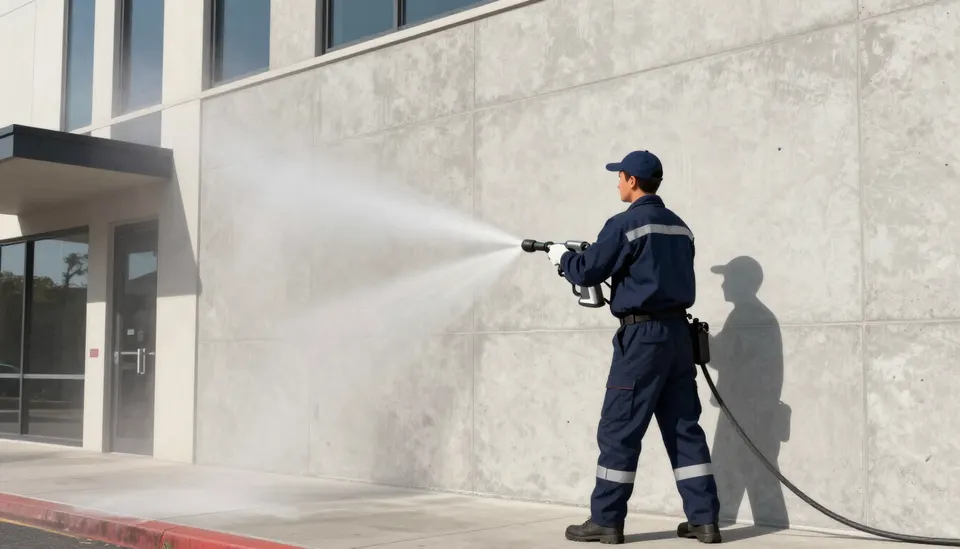
Urgency is not a reason to skip a test patch. A remover that lifts spray paint may also soften the original coating. High pressure can damage mortar, etch concrete, or force water into joints. The contractor should explain the proposed method and any limitations before the work begins.
For porous surfaces, several controlled treatments may be safer than an aggressive attempt to remove every trace at once. If repainting is the more suitable option, preparation and color matching need to be considered. An emergency plan should include how decisions are made when the first test reveals an unexpected compatibility issue.
Manage pedestrians, tenants, and runoff
Cleaning areas need appropriate barriers and a safe route for occupants. Wet surfaces, hoses, spray, and equipment can create hazards if the site is not organized. Inform tenants or staff of the planned work window and any temporary restrictions. Do not route the public through the active cleaning zone simply to keep an entrance open.
Wastewater may contain paint residue and cleaning chemicals. Ask how it will be contained and collected before treatment starts. Runoff should not enter storm drains. Disposal and any discharge permissions depend on the site and the relevant local authority, so a contractor should verify requirements rather than treating urgent timing as an exemption.
Understand what emergency availability means
A company may accept urgent calls outside regular hours without being able to complete every project immediately. Access equipment, difficult surfaces, weather, and staffing can influence the earliest safe work window. Ask for a realistic response plan, not just the word emergency on a webpage.
Confirm whether expedited scheduling changes the price and what the estimate includes. Some properties can be assessed from photos, while others need an onsite inspection. Written confirmation of timing, scope, and site responsibilities helps both parties avoid misunderstandings during a stressful situation.
Reduce friction on future incidents
Keep a short incident-response checklist with property contacts, surface information, insurance requirements, and access instructions. Save records of previous graffiti removal methods and any protective coatings. This allows a contractor to choose compatible treatment more quickly if the same area is targeted again.
After cleanup, inspect lighting, sightlines, and maintenance practices with the property team. Anti-graffiti coating services may help simplify future removal on suitable surfaces, but no coating prevents vandalism itself. A practical maintenance plan combines inspections, documentation, prompt reporting, and appropriate cleaning rather than relying on a single product.
For related guidance, read our graffiti removal cost guide and explore our professional graffiti removal services. For cleaning beyond graffiti, see our pressure washing services.
Frequently asked questions
Is same-day graffiti removal guaranteed?
No. Ask for current availability and a realistic plan for your location and surface. Safe access, material compatibility, and wastewater controls can affect scheduling.
Should I paint over offensive graffiti immediately?
A temporary response may be appropriate, but confirm authorization and surface compatibility first. Painting without preparation can leave visible patches and complicate later restoration.
What photos should I send for an urgent estimate?
Send a wide view, a close-up, and an image showing access and nearby drains. Include dimensions and the address, while avoiding faces and sensitive information.
Call to discuss an urgent cleanup
Contact Bay Area Graffiti Removal Service at (415) 300-4421 to discuss emergency graffiti removal in San Francisco or nearby Bay Area cities. Share photos and site details so we can assess the work and confirm availability. Request a free estimate before authorizing the proposed treatment.
Find the right service for your property
Tell us about your surface, location, and access requirements before choosing a cleaning method.
Explore related services Contact our team