
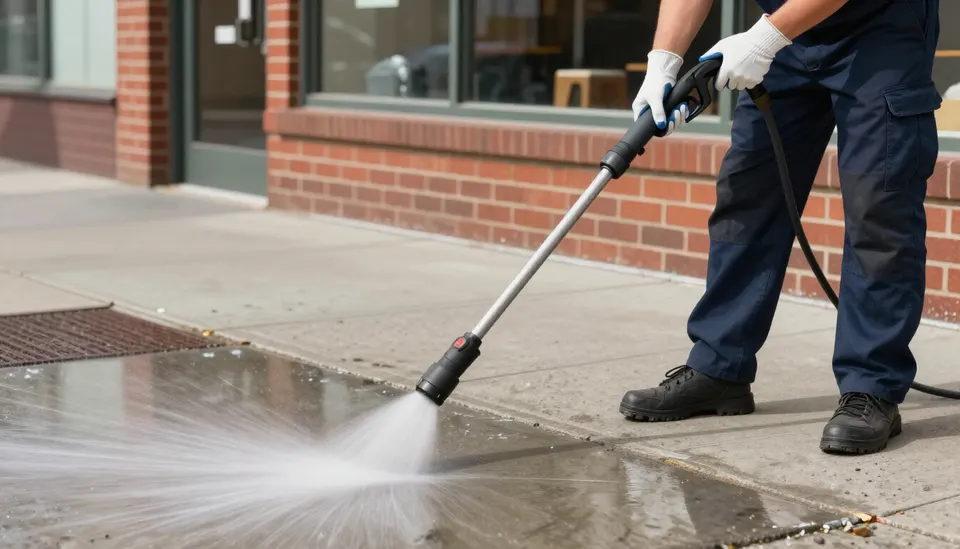
An eco-conscious graffiti removal plan is more than choosing a product with a reassuring label. Cleaning can release paint particles, dissolved residue, chemicals, and dirt. The way those materials are controlled and handled matters as much as the method used to lift the marking from the wall.
For San Francisco property owners and Bay Area managers, responsible planning starts with the surface and the site. Select suitable products, protect nearby areas, and establish containment and disposal arrangements before washing. This guide explains practical questions to ask; it is general guidance, not a substitute for site-specific direction from the relevant authority or a qualified professional.
Assess the surface and the contamination
Identify the material, original finish, condition, and graffiti type before choosing a treatment. Brick, concrete, painted walls, and coated metal respond differently to removers and pressure. Existing damage or unknown older coatings can affect the risks of disturbing the surface and may require specialist evaluation.
A small test helps determine whether a method removes the graffiti without unnecessary damage. Effective pretreatment and appropriate dwell time can reduce the need for aggressive force. The goal is not simply using less water or a stronger chemical, but selecting a suitable overall process that preserves the property and controls the resulting waste.
Select products using real information
Manufacturer instructions and safety data
Review manufacturer directions and the relevant safety data sheet for a proposed cleaner. These describe handling, compatibility, and hazards that should inform the work plan. Product choice needs to consider the surface, graffiti chemistry, nearby materials, and the route for collecting and disposing of residue.
Labels do not replace controls
Biodegradable or environmentally preferable ingredients do not make wastewater safe for storm drains. The water can still contain paint, oils, and other contaminants removed from the wall. Avoid unsupported claims that any product is harmless in every setting. Appropriate application and containment remain necessary regardless of marketing language.
Prepare the site before applying products
Remove loose dry debris where suitable so it does not become part of the wash water. Protect adjacent finishes, landscaping, doors, and fixtures. Identify the direction of runoff, nearby drain inlets, and places where water could enter the building. Slopes and tight access can change the containment approach.
Plan safe routes for pedestrians, residents, and workers. Hoses, barriers, wet surfaces, and cleaning products should not obstruct occupied areas without an appropriate plan. San Francisco storefronts and Bay Area apartment courtyards often require coordination with neighbors or tenants before equipment arrives.
Contain and collect cleaning wastewater
A professional plan may use suitable barriers, recovery equipment, and collection arrangements based on the site. The controls should be in place before rinsing begins and monitored during the work. Containment is not effective if water escapes around a barrier or flows toward an overlooked drain.
Recovered water may contain fine particles and dissolved contaminants, so simply screening visible debris does not establish that it is safe to discharge. The appropriate handling route depends on its contents and applicable requirements. Ask the contractor to explain the collection process and what happens to the recovered material after the job.
Confirm an appropriate disposal route
Do not assume a street drain, parking-garage drain, or interior floor drain is suitable for wash water. Drain connections and permissions need to be understood. A sanitary-sewer discharge, where considered, may require authorization and conditions; it is not an automatic alternative to a storm drain.
Consult the relevant local stormwater, wastewater, or environmental authority when needed. San Francisco, Oakland, Berkeley, San Jose, and other Bay Area jurisdictions can have different site-specific arrangements. The contractor should confirm applicable requirements rather than using a single generic disposal practice everywhere.
Use heat and pressure thoughtfully
Hot water pressure washing can support suitable cleaning, particularly for some greasy deposits, but heat does not eliminate contamination. Controlled rinsing should be matched to the material and pretreatment. Excessive pressure can damage the wall and generate additional debris while making the original problem worse.
Choose methods based on assessment, not a belief that the most powerful equipment is the most responsible. Some surfaces need lower pressure or specialist treatment. Product compatibility, operator technique, surface preservation, and wastewater recovery work together; none is a substitute for the others.
Ask for a complete written scope
A responsible estimate should identify surfaces, methods, protection, collection, and cleanup. Ask how unexpected conditions will be handled and who approves a change if the test patch reveals an unsuitable coating. Clarify whether wastewater transport or other disposal arrangements are included rather than assumed.
- What products and compatibility checks are proposed?
- How will adjacent materials and occupants be protected?
- Where will runoff travel, and how will it be contained?
- How will recovered water and residue be handled?
- What permissions or specialist evaluations may be needed?
- What records will be provided after completion?
These questions help property owners compare professional graffiti removal services on practical controls rather than vague green claims. Keep product and treatment records for future maintenance, especially when protective coatings are installed after cleanup.
Review our graffiti removal services and anti-graffiti coating options. For more on surface protection, read our brick, concrete, and painted-wall guide.
Frequently asked questions
Is biodegradable cleaner safe to wash into a storm drain?
No. That label does not authorize discharge, and wash water may contain paint and other contaminants. Plan containment and verify an appropriate disposal route.
Can collected wash water always go into a sanitary sewer?
No. Suitability and permission depend on its contents and local requirements. Confirm the proposed route with the relevant authority before discharge is considered.
Does hot water remove the need for chemicals or recovery?
Not necessarily. Graffiti may require compatible pretreatment, and the resulting water can still carry contaminants. Heat does not replace assessment or collection controls.
Request a responsibly planned estimate
Contact Bay Area Graffiti Removal Service for a free estimate on graffiti removal and exterior cleaning. Share photos, surface details, and information about access and nearby drains. We can discuss a site-specific approach for San Francisco and Bay Area properties, including appropriate wastewater planning.
Find the right service for your property
Tell us about your surface, location, and access requirements before choosing a cleaning method.
Explore related services Contact our team